
You just finished your first teeth whitening appointment. Your smile looks noticeably brighter, and you want to keep it that way with the best teeth whitening results. What you do in the next 24 to 48 hours matters more than anything. The whitening process temporarily opens the pores in your enamel, which means your teeth are more receptive to pigment, more prone to sensitivity, and more vulnerable to staining right after treatment than they will be a few days later.
This is not a reason to worry. It is just the window where a little attention goes a long way. Good post-teeth-whitening care in those first two days protects the results you paid for and helps your teeth settle back to normal faster.
At Bloomington Family Dental, we walk every patient through post-teeth-whitening care before they leave the chair. But we know life gets busy, and instructions are easy to forget. This guide covers everything: what to eat, what to avoid, how to manage sensitivity, and how to make your results last as long as possible. If you are considering treatment and want to know what recovery actually looks like, this covers that too.
if you are still deciding between at-home strips and an in-office appointment, our page on professional teeth whitening in Bloomington walks through the difference and what we actually offer.
Why the First 48 Hours After Whitening Are Different
Professional teeth whitening uses a peroxide-based gel that penetrates the enamel and lifts stain particles from within the tooth. That process works, and it works well. But it also temporarily makes the enamel more porous during the process and for a short period afterward.
For the first 24 to 48 hours, your teeth absorb substances faster than usual. Pigments from food and drink can settle into that temporarily open enamel before it fully recovers. Temperature extremes trigger the nerve endings that the peroxide has already made more reactive. Acidic foods and drinks can cause additional irritation to enamel already undergoing whitening.
None of this is permanent. Post-teeth-whitening sensitivity is normal and common; for most patients, it resolves within a day or two. The instructions in this post are specifically for that recovery window. After 48 hours, most people can return to their normal diet and routine without issue.
Post-Teeth Whitening Care: What To Eat and Drink
The concept most dentists use is called the “white diet.” It is straightforward: for the first 48 hours after treatment, stick to foods and drinks that are light in color, low in acid, and gentle on enamel. Your teeth are absorbing things readily right now. A dark or acidic food in that window will do more damage to your results than it would on a normal day.
Foods that are safe and recommended right after whitening:
- Plain yogurt, milk, white cheese, cottage cheese
- Skinless chicken, turkey, or white fish
- Eggs (scrambled, poached, or hard-boiled)
- White rice, plain pasta, mashed potatoes, oatmeal
- Cauliflower, peeled cucumber, white onions
- Bananas, peeled pears, white grapes
- Plain water, herbal tea (not dark teas), coconut water
Avoid these foods and drinks in the first 48 hours:
- Coffee and black tea (even with milk, these stain)
- Red wine, dark juices, sports drinks, soda
- Tomato-based sauces, soy sauce, dark condiments
- Berries, beets, dark leafy greens
- Citrus fruits, pickles, vinegar-based foods
- Anything with strong artificial coloring
The rule of thumb is: if it can possibly stain a white shirt, it will stain your teeth too. After 48 hours, your enamel has rehydrated and closed back up. You can easily switch to your normal eating habits at that point, with some reasonable ongoing habits we cover below.
How To Manage Post-Teeth-Whitening Sensitivity
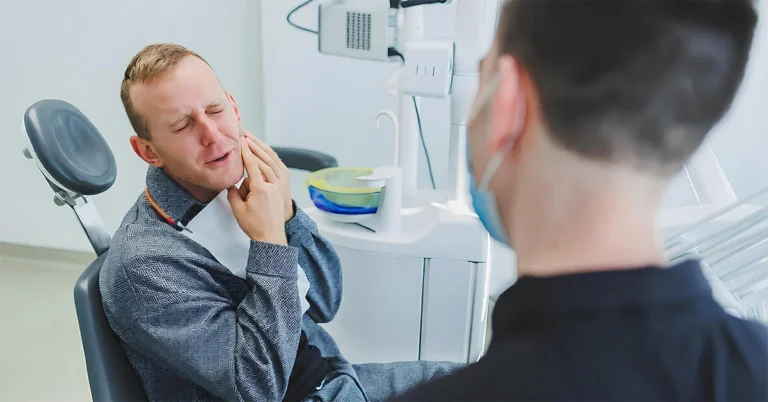
Post-teeth-whitening sensitivity is the most common concern patients bring up. It usually shows up as a brief sharp sensation when your teeth hit something very cold, very hot, or sweet. Some people describe it as a mild ache in the hours right after treatment. Both are normal.
The sensitivity happens because the peroxide in the whitening gel interacts with the dentin layer under your enamel. Dentin contains tiny tubules that connect to your tooth’s nerve, and when they are exposed or stimulated, you feel it. This is temporary. For most patients, it fades within 24 to 48 hours.
Ways To Manage Post-Whitening Sensitivity
- Use a mild, not rigorous, desensitizing toothpaste that contains potassium nitrate or stannous fluoride. Starting this a week or two before your appointment and continuing for a few days after gives the best results.
- Take an OTC painkiller like ibuprofen or acetaminophen before sensitivity peaks, following the dosage instructions on the label. (Do not apply pain medication directly to your gums. It will irritate the tissue.)
- Stick to room-temperature food and drinks. Hot coffee or ice water will make sensitivity worse during the recovery window.
- Use a soft-bristled toothbrush and brush gently. Hard brushing on already reactive enamel adds unnecessary irritation.
- Drink through a straw on the first day to minimize contact between your teeth and liquid.
If your dentist applied a fluoride treatment at the end of your whitening session, that is specifically designed to help with this. It remineralizes the enamel and reduces the amount of nerve irritation you experience.
What Counts as Post-Teeth-Whitening Pain That Needs Attention
There is a difference between normal post-whitening sensitivity and something that warrants a call to the dentist. Here is how to tell them apart:
| Symptom | Normal | Call Us |
|---|---|---|
| Brief, sharp sensation with hot or cold | Yes | If it lasts more than 5 seconds per exposure |
| Mild aching in teeth for a few hours | Yes | If it persists beyond 48 hours |
| Gum tenderness near whitened teeth | Often yes | If gums are swollen, blistered, or bleeding |
| Sensitivity that improves each day | Yes | If it gets noticeably worse instead |
| No sensitivity at all | Common | N/A |
Post-teeth-whitening pain that is severe, worsening rather than improving, or localized to a specific tooth is worth a conversation with us. Severe pain in a single tooth sometimes points to an underlying issue, such as a cavity or a crack, that the whitening process made more noticeable. The whitening does not cause it, but the whitening can unmask it.
Post Op Instructions After Teeth Whitening: The Full First-Week Checklist
The post-op instructions we give our patients after teeth whitening at Bloomington Family Dental cover both the acute 48-hour window and the week that follows. Here is the full picture:
First 24 Hours
- No colored foods or drinks of any kind
- No tobacco products (smoking after whitening is one of the fastest ways to reverse results)
- Rinse with plain water after eating anything
- Brush gently with a soft toothbrush and non-whitening toothpaste
- Use desensitizing toothpaste if you have it
- Avoid extreme temperatures in food and drink
24 to 48 Hours
- Continue the white diet
- Reintroduce foods gradually, starting with lighter-colored options
- Sensitivity should be decreasing during this window
- Continue avoiding coffee, tea, and wine
- Drink through a straw for colored beverages if you reintroduce them
Days 3 Through 7
- Most patients are back to their normal diet
- Be mindful of frequent coffee, tea, and wine consumption
- Rinse with water after staining foods and drinks
- Continue brushing twice daily, flossing once daily
- Avoid whitening toothpastes for at least a week, as enamel continues to settle
Following these post-op instructions carefully after teeth whitening makes a genuine difference in how long your results last and how comfortable the recovery period feels.
How Long Do Professional Teeth Whitening Results Last?
Results from professional teeth whitening vary by patient. A few factors determine how long the brightness holds: your natural enamel color, your diet, how often you drink coffee or wine, and whether you use tobacco.
Most patients who maintain reasonable habits after treatment see results lasting anywhere from six months to two years. Patients who consume large amounts of coffee or red wine daily and do not manage them well will see staining return more quickly. That is not a failure of the treatment. It is just the nature of enamel.
A few habits that help results last longer beyond the first week:
- Rinse with water after staining drinks rather than letting pigment sit on your teeth
- Use a straw for coffee, iced tea, and dark sodas when practical
- Brush twice daily and floss once daily consistently
- Schedule routine dental cleanings every six months. Professional cleanings remove surface staining that builds up between whitening treatments and keep your baseline brighter.
- Consider touch-up whitening once a year to maintain a specific shade.
The best teeth whitening results are not just about the day of treatment. They are about the habits that follow it.
Why In-Office Whitening Outperforms At-Home Kits on Sensitivity Too
One thing patients are often surprised to hear is that professional teeth whitening, done correctly in a dental office, often produces less sensitivity than over-the-counter strips or poorly fitting at-home trays. Here is why.
Generic drugstore trays do not fit the exact contours of your teeth. Whitening gel can get onto your gums, causing irritation and increasing the likelihood of post-teeth-whitening pain. The peroxide concentration by volume in over-the-counter products is also unregulated, which means some people are using a stronger formula than they need and experiencing unnecessary discomfort.
At Bloomington Family Dental, we use custom-fitted trays, clinically appropriate concentrations, and directly monitor the process. We can also apply desensitizing agents before and after treatment to reduce the amount of sensitivity you experience. The result is a whiter smile and a smoother recovery than most patients get from store-bought kits. If you want to understand the options in more detail, our cosmetic dentistry page covers the full range of smile treatments we offer.
It is also worth knowing that veneers are an option if your staining is intrinsic rather than surface-level. Some discoloration comes from inside the tooth and does not respond to peroxide-based whitening. We will tell you upfront which category you fall into before recommending a treatment path.
Your Bright Smile Took One Appointment & Protecting It Takes a Few Simple Habits
Good post-teeth whitening care is not complicated, but it does require some attention in the first couple of days. Stick to the white diet, manage sensitivity with the right products, avoid stain-causing foods, and your results will last far longer than they would if you went back to coffee and red wine the same afternoon.
If you have not had a whitening treatment yet and you have been thinking about it, we are straightforward with patients about what results to realistically expect based on your starting shade and the nature of your staining. Just an honest conversation about what whitening can and cannot do for your specific smile.
Ready for a Brighter Smile? We Make It Simple!
Whether you want to schedule a whitening treatment, have questions about post-care, or want to know if whitening is the right option for your teeth, we are here to help. Most appointments take under an hour, and you leave the same day with noticeably brighter results.
Frequently Asked Questions
How long does sensitivity last after teeth whitening?
For most patients, post-teeth-whitening sensitivity peaks in the first few hours after treatment and fades within 24 to 48 hours. Using a desensitizing toothpaste before and after treatment considerably shortens that window. If sensitivity is still significant after 48 hours, call us.
Can I drink coffee after teeth whitening?
Not in the first 48 hours. Coffee is one of the fastest ways to undo whitening results because your enamel is temporarily more porous right after treatment, so it absorbs pigment more easily. After 48 hours, coffee in moderation is fine. Rinsing with water afterward and drinking through a straw helps reduce staining over time.
Is it normal for teeth to look streaky or uneven right after whitening?
Yes, this is common and usually temporary. Teeth can look patchy immediately after treatment as the enamel rehydrates unevenly. Give it 24 to 48 hours, and the color typically evens out. If unevenness persists for more than a few days, contact us.
What toothpaste should I use after whitening?
Use a gentle, non-abrasive toothpaste for at least the first week. Desensitizing toothpastes that have potassium nitrate or stannous fluoride are ideal. Avoid whitening toothpastes right after treatment because the abrasives can irritate enamel that is still recovering.
How long should I follow the white diet?
Strictly for the first 48 hours. After that, reintroduce foods gradually, starting with lighter-colored options. By day three, most patients are back to eating normally with some reasonable awareness about staining foods and drinks.
When can I smoke or use tobacco after whitening?
Tobacco is one of the most aggressive staining agents, and using it right after whitening will quickly reverse your results. We strongly recommend avoiding it for at least 48 hours after treatment, and ideally longer. If you use tobacco regularly, it will significantly shorten how long your whitening results hold, regardless of when you resume.
Does professional teeth whitening damage enamel?
When done correctly with appropriate concentrations and professional supervision, no. The sensitivity you feel is temporary and does not indicate permanent enamel damage. Over-the-counter products used incorrectly carry greater risk because application is unsupervised and tray fit is uncontrolled. This is one of the reasons professional whitening is the better option for most people.
How often should I whiten my teeth?
This depends on your enamel and how your teeth responded to the initial treatment. We typically recommend waiting at least six months before whitening again. Annual touch-ups are a reasonable approach for patients who want to maintain their results over the long term. We will give you a clear recommendation based on your specific situation.