
Sleep apnea is a sleep disorder that causes breathing to repeatedly stop and restart while you sleep. These interruptions can prevent you from getting restful sleep and, over time, lead to other health issues. But what causes sleep apnea, and why do some people develop it while others don’t?
The answer depends partly on the type of sleep apnea. Obstructive sleep apnea (OSA), the most common type, occurs when the airway repeatedly becomes narrowed or blocked during sleep. Central sleep apnea (CSA) occurs when the brain does not consistently send the signals needed to control breathing. Complex sleep apnea is a combination of both. Because CSA is less common and is often related to underlying health conditions, this article will focus on what causes the most common type: obstructive sleep apnea.
What Causes Sleep Apnea?
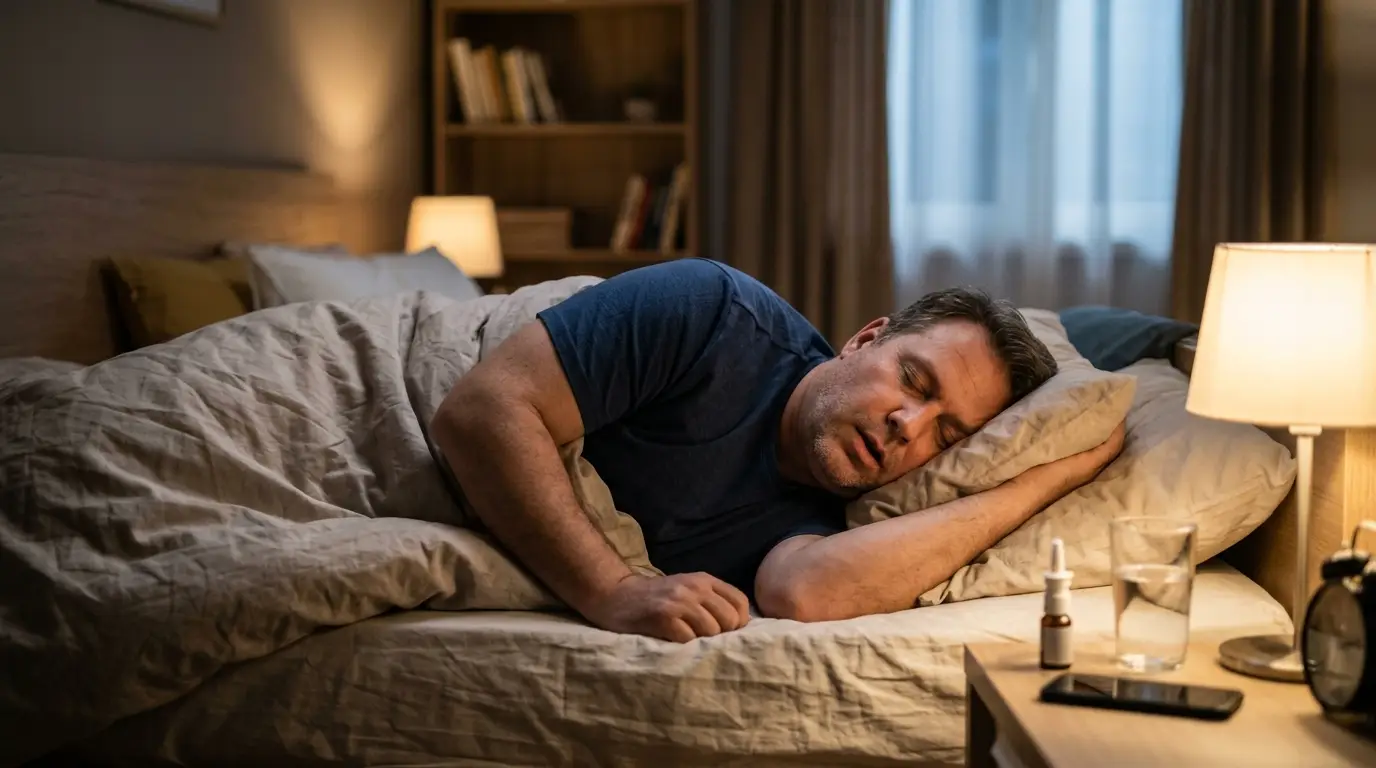
Obstructive sleep apnea develops when the muscles and tissues that help keep your airway open relax too much during sleep, causing the airway to narrow or become temporarily blocked. When breathing is interrupted, the brain briefly wakes the body enough to reopen the airway. These awakenings may be so short that you don’t remember them, but they can happen repeatedly throughout the night and interfere with restful sleep.
Several physical and lifestyle factors can increase the likelihood of this happening including:
Anatomy of the Mouth and Airway
The natural structure of your mouth, throat, and airway can influence your risk of obstructive sleep apnea. Factors such as a naturally narrow airway, larger tongue or tonsils, or certain jaw structures may leave less room for air to pass through while you sleep.
Excess Weight
Excess body weight is an important risk factor for obstructive sleep apnea. Fat deposits around the upper airway can contribute to narrowing and make it more likely that the airway will become obstructed during sleep. However, sleep apnea can affect people at any body weight, so being at a healthy weight does not rule it out.
Age
The risk of obstructive sleep apnea generally increases with age. Changes in muscle tone and other age-related factors can make the airway more likely to narrow during sleep.
Alcohol and Certain Medications
Alcohol and some sedating medications can further relax the muscles around the airway during sleep. For someone who already has or is susceptible to obstructive sleep apnea, this can make airway obstruction more likely or worsen existing symptoms.
Smoking
Smoking can contribute to inflammation and swelling in the upper airway. This irritation may increase the risk or severity of obstructive sleep apnea.
Nasal Congestion
Difficulty breathing through your nose can also contribute to sleep-disordered breathing. Chronic nasal congestion or anatomical problems that restrict nasal airflow may increase the likelihood of obstructive sleep apnea.
What Triggers Sleep Apnea?
If you’re wondering what triggers sleep apnea, it’s helpful to distinguish between an underlying cause or risk factor and something that makes an existing condition worse. Sleep apnea usually isn’t caused by one isolated event or habit. Instead, factors that further narrow or relax the airway can make obstructive events more likely in someone who is already susceptible.
Drinking alcohol before bed, sleeping on your back, taking certain sedating medications, and experiencing nasal congestion are examples of factors that may worsen sleep apnea in some people. That means a trigger doesn’t necessarily explain why you developed sleep apnea in the first place. A trigger only worsens sleep apnea in someone who is already susceptible to it.
Is Heavy Snoring a Sign of Sleep Apnea?
Heavy snoring is one of the most recognizable signs associated with obstructive sleep apnea, but snoring and sleep apnea aren’t the same thing. A person can snore without having sleep apnea.
The concern increases when loud or frequent snoring occurs alongside other symptoms, such as:
- Pauses in breathing noticed by another person
- Gasping, choking, or snorting during sleep
- Waking with a dry mouth
- Morning headaches
- Excessive daytime sleepiness
- Difficulty concentrating
- Irritability
- Frequently waking during the night
Since many breathing interruptions happen while you’re asleep, another person may notice the signs before you do.
What Problems Can Sleep Apnea Cause?
Sleep apnea doesn’t only interfere with a good night’s sleep. Repeated drops in oxygen and frequent nighttime awakenings can place stress on the body and affect health over time.
Untreated obstructive sleep apnea has been associated with an increased risk of high blood pressure, cardiovascular disease, stroke, type 2 diabetes, and problems with concentration and mood. Daytime sleepiness can also affect work, daily activities, and driving safety. These potential problems caused by sleep apnea are why persistent symptoms shouldn’t simply be dismissed as poor-quality sleep or ordinary snoring.
What Can Help Sleep Apnea?
What can help sleep apnea depends on its severity, underlying factors, and the individual patient. That’s why getting an appropriate diagnosis is important before deciding how to address it. Depending on the situation, management may include lifestyle changes, positive airway pressure therapy such as CPAP, oral appliance therapy, or other medical or dental approaches.
For some people, changes such as reducing alcohol near bedtime, addressing nasal congestion, changing sleep position, or managing weight may also be recommended as part of a broader treatment plan.
A sleep medicine provider can diagnose sleep apnea and determine its severity. Dentists can also play a role in recognizing potential signs of sleep-disordered breathing and, when appropriate, providing oral appliance therapy for patients who have been diagnosed with obstructive sleep apnea.
When Should You Get Help for Possible Sleep Apnea?
Occasional snoring doesn’t necessarily indicate a sleep disorder. However, heavy snoring accompanied by gasping, choking, witnessed pauses in breathing, or significant daytime sleepiness may be a reason to discuss your symptoms with a healthcare provider.
If you suspect sleep apnea, getting properly evaluated can help determine whether your breathing is being interrupted during sleep and what may be contributing to the problem. Once sleep apnea is diagnosed, your healthcare or dental provider can help determine which management options are appropriate for you.
Schedule an appointment with Bloomington Family Dental in Bloomington, MN, to discuss your concerns and learn whether further evaluation or dental sleep apnea care may be appropriate.
FAQs About the Causes of Sleep Apnea
Can sleep apnea develop suddenly?
Sleep apnea may seem to develop suddenly, but it often develops gradually and symptoms become more noticeable over time. A person can have sleep apnea for some time before recognizing the signs.
Is sleep apnea hereditary?
Sleep apnea itself is not necessarily inherited, but having a family history of obstructive sleep apnea can increase your risk. Family members may share physical characteristics that affect the airway and make it more likely to become narrowed during sleep.
Can hormones affect your risk of sleep apnea?
Hormonal changes may influence sleep apnea risk. For example, the risk of obstructive sleep apnea increases in women after menopause, although age, body composition, and other factors may also contribute.
Can pregnancy cause sleep apnea?
Pregnancy can increase the risk of developing obstructive sleep apnea or make existing sleep-disordered breathing worse. Hormonal changes, weight gain, and changes that affect the upper airway can all play a role.
Can enlarged tonsils cause sleep apnea?
Yes. Enlarged tonsils can take up space in the throat and contribute to airway obstruction during sleep. They are an especially important cause of obstructive sleep apnea in children, although they can affect adults as well.
Can certain health conditions increase your risk of sleep apnea?
Yes. Certain conditions, including high blood pressure, type 2 diabetes, and some hormonal or cardiovascular conditions, are associated with a higher likelihood of obstructive sleep apnea. However, having one of these conditions does not necessarily mean it caused the sleep apnea.