

TMJ / TMD Dental Treatment
TMJ / TMD Dental Treatment in Bloomington, MN
Jaw pain, clicking, and headaches that keep coming back are not just stress. They are common signs of TMD. Dr. Brian Gray offers TMD dental treatment to patients in Bloomington, MN, who want a clear diagnosis and a straightforward plan to get their jaw working pain-free again.
What Is TMD and How Is It Treated?
TMD, standard form temporomandibular disorder, is a medical condition that impacts the range of motion of the joint linking the jawbone (TMJ) to the skull. When this joint is inflamed, misaligned, or strained, it can cause pain, limited movement, and a clicking or popping sensation whenever you open or close your mouth.
For TMD treatment, the dentist evaluates the severity of the dysfunction. For most patients, a custom occlusal splint worn at night reduces joint pressure and allows the muscles to relax. When combined with bite adjustments and targeted therapy, most patients experience a significant reduction in pain and discomfort without undergoing emergency dental surgery.
Types of TMD Patients Encounter
Before getting into types, one quick clarification. TMJ refers to the temporomandibular joint itself, the joint that hinges your jaw to your skull. TMD refers to the disorders that affect it. So when people say they have TMJ, they usually mean they have a TMD condition.
TMD is not one single condition. It falls into three categories, and some patients have more than one at the same time. For all of these, you will need to see a specialist dentist for TMJ / TMD treatment options.
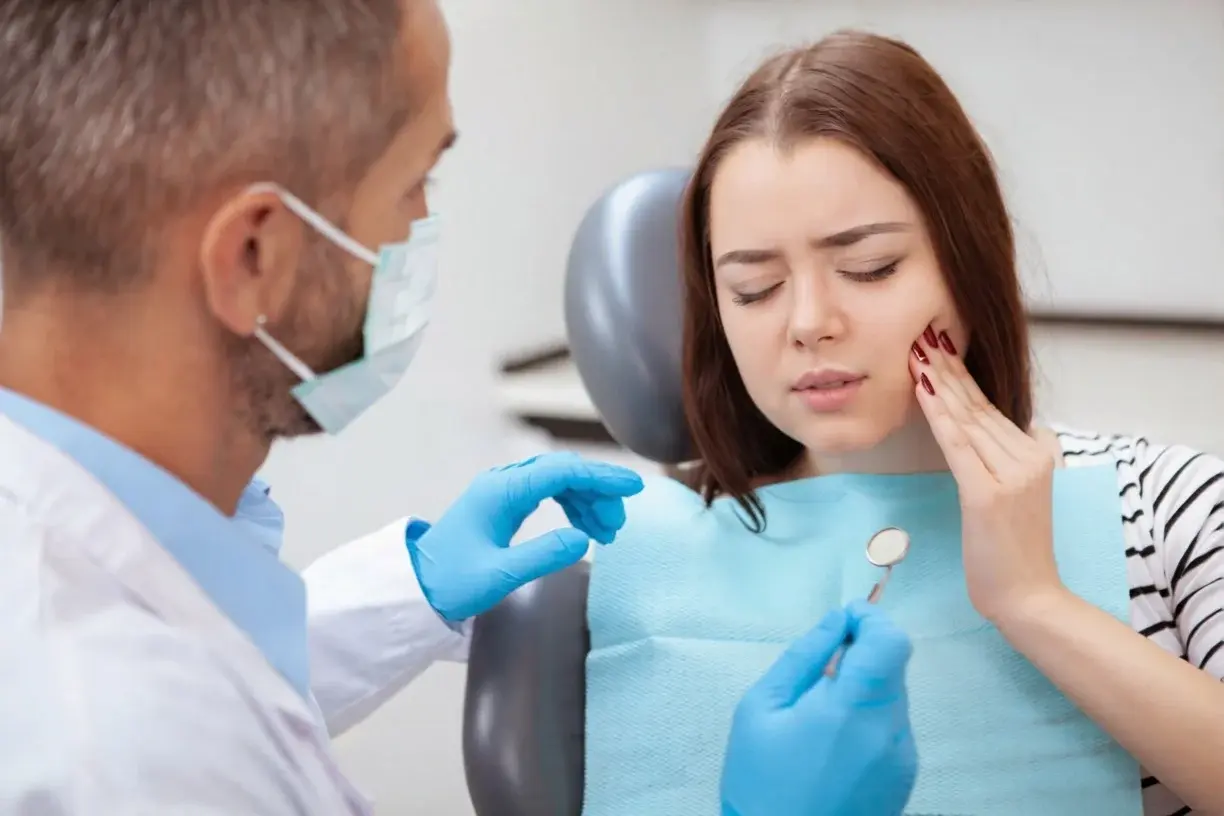
Muscle Pain (Myofascial)
The most common type. Tightness and aching in the jaw muscles, often spreading to the neck and shoulders.
Joint Displacement
The soft disc inside the jaw joint shifts out of place. This is what causes clicking, popping, and locking.
Joint Arthritis
Wear and breakdown of the jaw joint itself. More common in older patients and tends to worsen without treatment.
Signs of TMD: Self-Assessment Checklist
TMD symptoms often get blamed on stress or tension headaches. These are the signs that actually point to the jaw joint.
- Jaw Pain: Soreness around the jaw, ear, or temple that gets worse when you eat or talk.
- Clicking or Popping: Sounds from the jaw every time you open or close your mouth.
- Limited Opening: Difficulty opening your mouth fully, or a jaw that locks without warning.
- Chronic Headaches: Recurring headaches around the temples from jaw muscle tension.
- Ear Discomfort: Pain or pressure in the ears with no ear infection present.
- Teeth Grinding: Getting up from sleep with a sore jaw or worn teeth from clenching during sleep.
Benefits of TMD Dental Treatment
- Lasting Pain Relief: TMD dental treatment reduces joint pressure and muscle tension, so jaw, ear, and head pain gradually stop being part of your day.
- Full Jaw Function: Proper joint alignment means you can chew, speak, and open your mouth without pain or catching.
- Fewer Headaches: When jaw muscle tension is treated at the source, the tension headaches it causes tend to follow.
- Protected Teeth: Addressing nighttime grinding early stops enamel damage before it reaches the point where restorative work is needed.
- Better Sleep: Less jaw tension at night means fewer interruptions and less pain-driven waking.
- Non-Surgical Option: Most patients get real relief from conservative dental TMD treatment alone, no injections or procedures required.
Risks of Untreated TMD to Your Oral Health
TMD does not stay a jaw problem. Left untreated, the strain it puts on your teeth, joints, and surrounding tissue compounds steadily.
- Enamel Wear: Nightly grinding from untreated TMD steadily wears down enamel. Once it is gone, it cannot grow back, and the teeth underneath become vulnerable.
- Cracked Teeth: The clenching force from TMD is enough to fracture molars and break fillings, sometimes without any pain until the damage is already significant.
- Disc Damage: The small cushioning disc inside the jaw joint can slip out of position permanently, causing chronic pain and restricted movement that gets harder to treat over time.
- Joint Breakdown: Long-term inflammation in the jaw joint breaks down cartilage and bone, leading to changes that are difficult to reverse without more involved care.
- Bite Problems: Worn and shifting teeth change how your bite comes together, which puts more uneven stress on the jaw joint and makes the whole cycle worse.
Our Procedure For Dental TMD Treatment Near You
Dr. Brian Gray approaches TMD dental treatment the same way he approaches everything else: find the cause, explain the plan, and treat it properly. Here is how it works at Bloomington Family Dental.
- Clinical Assessment: We evaluate your bite, joint function, and range of motion, and any signs of jaw damage before planning your treatment.
- Diagnostic Imaging: X-rays or referral imaging assess the jawbone joint structure and help rule out any degenerative changes or internal derangement that need attention first.
- Custom Occlusal Splint: A night guard or stabilization splint is fabricated from precise impressions of your teeth to relieve joint pressure while you sleep.
- Bite Adjustment: Selective treatment options correct uneven bite contact points that place excessive load on the joint over time.
- Ongoing Monitoring: Joint health, splint wear, and symptom changes are reviewed during regular checkups to keep treatment on track.
Don’t Let Jaw Pain Decide How You Have To Smile!
You do not have to keep managing jaw pain with over-the-counter relief and hoping it passes when you have a dental TMD treatment practice near you. A straightforward evaluation with Dr. Gray will identify whether TMD is the issue and what TMD treatment near you looks like in practice. Patients who come in early find the process is simpler than they expected. Before your visit, take a look at our membership options to understand your coverage.
FAQS
About TMJ / TMD Dental Treatment
What is TMD?
TMD stands for temporomandibular disorder. It is a condition affecting the joint that connects your jaw to your skull. When this joint is strained or misaligned, it causes pain, clicking, and limited jaw movement, which can affect eating, speaking, and sleep.
What are the different types of TMJ / TMD?
TMJ is the joint itself. TMD is the disorder affecting it. Most people use both terms interchangeably, and that is fine. There are three main types of TMD. Myofascial pain involves muscle tension in and around the jaw. Internal derangement refers to a displaced disc or joint damage, which can cause clicking and locking. Degenerative joint disease involves arthritis breaking down the joint itself.
How does TMD affect oral health?
TMD drives chronic teeth grinding and jaw clenching, which wears down enamel, crack teeth, and damages existing dental work. It also strains the jaw joint over time, leading to disc displacement and degenerative changes that may be harder to treat on their own.
Can a family dentist provide TMJ / TMD dental treatment?
Yes. A specialized dentist for TMJ / TMD treatment can assess your bite, joint function, and signs of grinding-related damage, then fabricate a custom occlusal splint to relieve pressure and restore alignment.
Where should I go for TMJ / TMD treatment near me in Bloomington?
Bloomington Family Dental offers TMD dental treatment near you in Bloomington, MN, for adults and families. We follow our standard oral evaluation to personalize your treatment options.
Is TMJ / TMD dental treatment invasive?
Most cases are treated conservatively. A custom occlusal splint, bite adjustments, and monitoring resolve the majority of TMD cases without surgery, injections, or any invasive procedures. If your first visit reveals more complex findings, Dr. Gray will discuss all treatment and preventive care options with you directly.
FAQS About
TMJ / TMD Dental Treatment
What is TMD?
TMD stands for temporomandibular disorder. It is a condition affecting the joint that connects your jaw to your skull. When this joint is strained or misaligned, it causes pain, clicking, and limited jaw movement, which can affect eating, speaking, and sleep.
What are the different types of TMJ / TMD?
TMJ is the joint itself. TMD is the disorder affecting it. Most people use both terms interchangeably, and that is fine. There are three main types of TMD. Myofascial pain involves muscle tension in and around the jaw. Internal derangement refers to a displaced disc or joint damage, which can cause clicking and locking. Degenerative joint disease involves arthritis breaking down the joint itself.
How does TMD affect oral health?
TMD drives chronic teeth grinding and jaw clenching, which wears down enamel, crack teeth, and damages existing dental work. It also strains the jaw joint over time, leading to disc displacement and degenerative changes that may be harder to treat on their own.
Can a family dentist provide TMJ / TMD dental treatment?
Yes. A specialized dentist for TMJ / TMD treatment can assess your bite, joint function, and signs of grinding-related damage, then fabricate a custom occlusal splint to relieve pressure and restore alignment.
Where should I go for TMJ / TMD treatment near me in Bloomington?
Bloomington Family Dental offers TMD dental treatment near you in Bloomington, MN, for adults and families. We follow our standard oral evaluation to personalize your treatment options.
Is TMJ / TMD dental treatment invasive?
Most cases are treated conservatively. A custom occlusal splint, bite adjustments, and monitoring resolve the majority of TMD cases without surgery, injections, or any invasive procedures. If your first visit reveals more complex findings, Dr. Gray will discuss all treatment and preventive care options with you directly.